Rethinking Man Pages: Making Command Documentation More Accessible
The Challenge of Traditional Man Pages
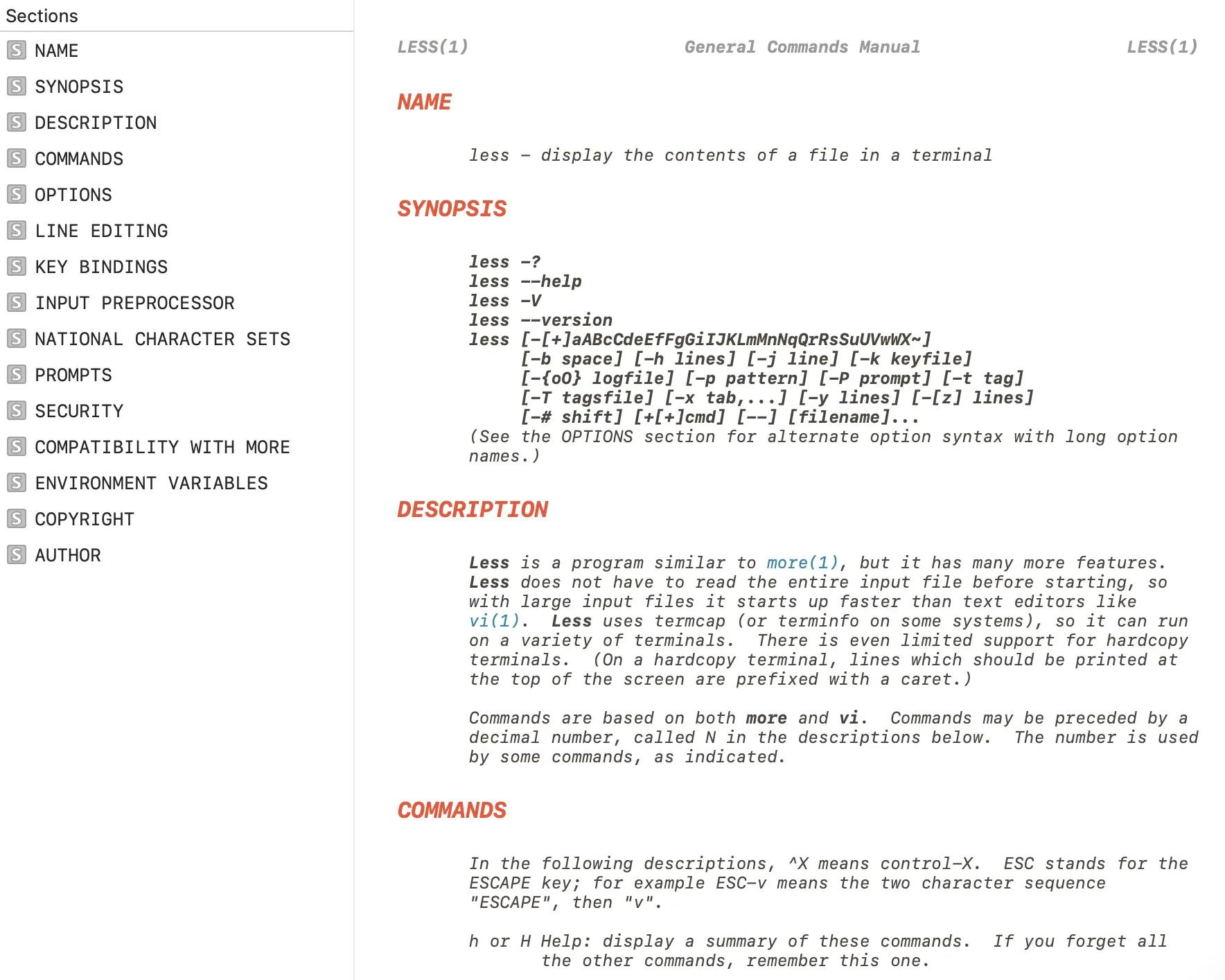
If you’ve spent any time working in the command line, you’ve likely encountered a man page that left you frustrated. While these documents are the primary reference for countless Unix tools, their dense structure often makes it difficult to quickly locate the option or syntax you need. The standard Synopsis—a lengthy string of flags like ls [-@ABCFGHILOPRSTUWabcdefghiklmnopqrstuvwxy1%,]—can feel more like a code puzzle than a helpful guide. After contributing to the Git man pages last year, I began to wonder: could man pages themselves become better cheat sheets? What changes would make them faster to scan and more intuitive to use?
Innovations in Synopsis Design: Lessons from rsync
One striking example of a better approach comes from the rsync man page. Instead of overwhelming readers with a wall of letters, rsync keeps its Synopsis minimal:
Local:
     rsync [OPTION...] SRC... [DEST]
Then, it introduces an OPTIONS SUMMARY section that lists each option with a one‑line description:
--verbose, -v— increase verbosity--info=FLAGS— fine‑grained informational verbosity--debug=FLAGS— fine‑grained debug verbosity--quiet, -q— suppress non‑error messages
This simple change means you can scan the summary to find the right flag, then jump to the full OPTIONS section for details. It’s a model that many other man pages could adopt to reduce cognitive load.
Categorizing Options for Quicker Retrieval: The strace Approach
Another helpful innovation appears in the strace man page. Rather than listing options alphabetically, strace groups them into categories like General, Startup, Tracing, Filtering, and Output Format. This structure mirrors how users actually think about commands: you don’t want to sift through forty unrelated flags just to find a tracing option. Categorization makes it easier to drill down to the exact feature you need, especially when you’re unfamiliar with the full set of options.
Experimenting with Grep: A Case Study
Inspired by strace, I tried to apply categorization to the grep man page. grep has a notoriously long list of options—some for output control, others for pattern matching, and still more for file handling. One option I always struggle to remember is -l (which lists only filenames with matches). Scanning the alphabetically sorted OPTIONS section for a single lowercase letter can take longer than you’d like. By grouping options into categories (e.g., “Output Format”, “Pattern Syntax”, “File Selection”), I hoped to make -l more discoverable. The exercise was enlightening: categories reduce the mental search space, but they also require careful naming so that users know exactly which group to look in.
Embedded Cheat Sheets: The Perl Model
Perhaps the most creative solution comes from the Perl documentation. Alongside comprehensive references like perlfunc and perlre, Perl includes man perlcheat—a dedicated cheat sheet man page. It presents syntax snippets in a compact, ASCII‑friendly format:
SYNTAX
 foreach (LIST) { }     for (a;b;c) { }
 while   (e) { }        until (e)   { }
 if      (e) { } elsif (e) { } else { }
This kind of “quick reference” man page is brilliant: it strips away prose and leaves only the essential patterns. For users who already understand the basics, a cheat sheet is far more efficient than a full man page. It raises an interesting question: could other tools offer a man toolcheat in addition to the full reference? The idea of embedding a condensed summary directly within the official documentation package is both practical and user‑friendly.
Conclusions: Toward Better Command Line Documentation
These examples—rsync’s OPTIONS SUMMARY, strace’s categorized sections, and Perl’s cheat sheet—all point toward a common goal: making man pages scanable. Users frequently consult man pages under time pressure; they don’t want to read paragraphs of explanation just to confirm the flag for verbose output. Small structural changes can dramatically improve the experience. While not every tool needs its own cheat page, adopting a clear summary at the top or grouping options by function would be a low‑effort, high‑impact improvement. The command line is here to stay; let’s make its documentation as efficient as the tools themselves.