OpenAI Awards $10,000 Grants to Young Innovators Using AI for Social Good
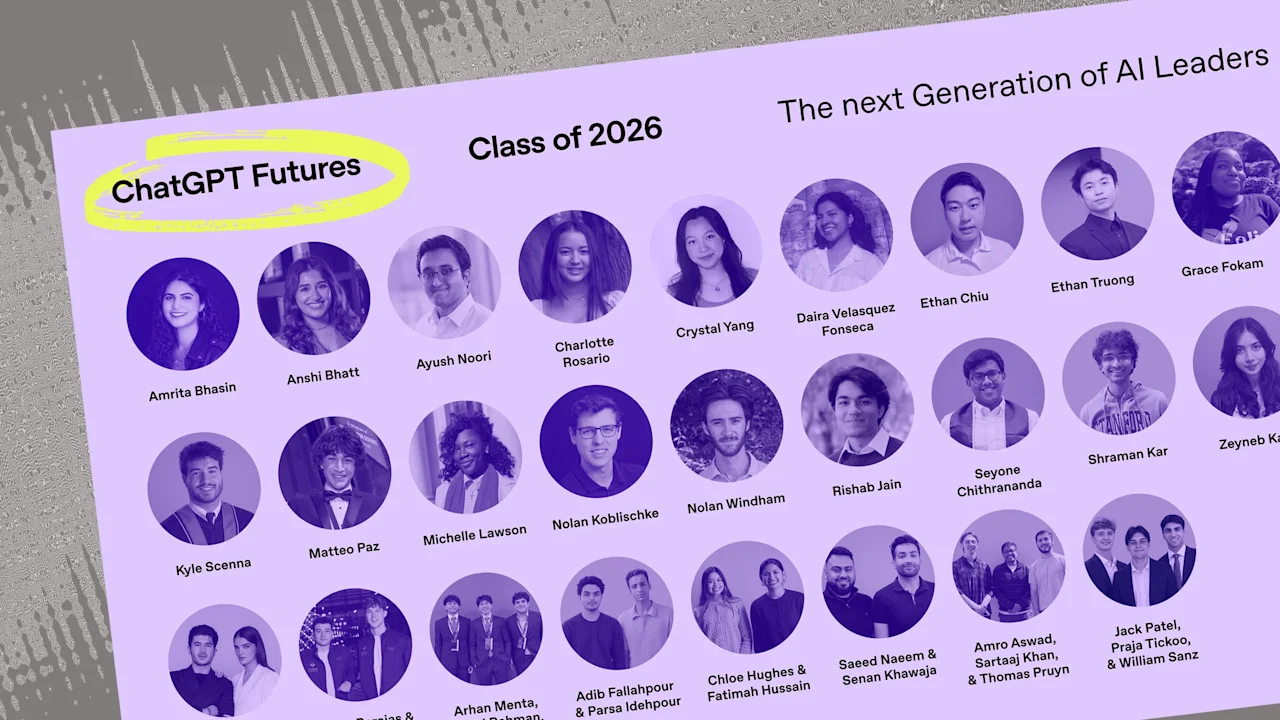
The ChatGPT Futures program by OpenAI has awarded $10,000 grants to 26 students and young people who are leveraging artificial intelligence to create meaningful change. From developing accessible audio games for the blind to predicting treatments for neurological diseases, these innovators demonstrate how AI can amplify human capabilities and address pressing social challenges. The following Q&A explores their inspiring projects and the impact of AI on their work.
What inspired Crystal Yang to create audio games for blind players?
During high school, Crystal Yang and her friends enjoyed playing the online game Wordle. However, one of her friends, who is blind, couldn't participate. Determined to bridge this gap, Yang collaborated with researchers at Texas A&M University to explore conversational audio interfaces for the game. This led her to found the nonprofit Audemy, which has developed over 50 audio-powered games accessible to blind and visually impaired players. The organization is now working on an accessible gaming console that incorporates audio and tactile features and functions without Wi-Fi. Yang's efforts highlight how AI can make digital experiences inclusive for everyone.
How did AI help Crystal Yang and her nonprofit Audemy?
AI has been integral to Yang's work with Audemy, from coding to management. She used AI to learn user research techniques, write formal papers, and integrate new game ideas into existing templates. As Audemy prototypes its console, AI assisted with computer-aided design tools and evaluating potential components. Yang describes AI as a versatile tool that multiplies her capabilities, enabling her to champion accessibility issues. By leveraging AI, she could focus on innovation rather than getting bogged down by technical hurdles, ultimately accelerating the development of games that bring joy to visually impaired users.
What is the ChatGPT Futures program by OpenAI?
ChatGPT Futures is an initiative by OpenAI designed to showcase how the rising generation uses AI for good. The program awarded $10,000 grants to 26 students and young people who are harnessing AI in innovative ways. OpenAI notes that the graduating class of 2026 is the first university cohort to have had ChatGPT available throughout nearly their entire college experience, as the tool debuted to the public in fall 2022. Leah Belsky, head of education at OpenAI, stated that these students are using AI to build things that many wouldn't have thought possible, emphasizing the transformative potential of AI in the hands of young creators.
What other projects were honored by the program?
The program recognized a diverse range of projects. Some honorees are using AI to build space robots that can relieve astronauts of routine tasks. Others are developing novel ways to spot disaster survivors through walls and debris using Wi-Fi signals. There are also initiatives to help older people avoid online scams and to assist Latin American street vendors in tracking their finances. Several honorees focus on science and medicine, such as predicting protein functions in the body, connecting people with local mental health resources, and optimizing drug production. These projects highlight AI's broad applications across different fields.
How is Ayush Noori using AI for neurological disease research?
Ayush Noori, a Rhodes Scholar with bachelor’s and master’s degrees from Harvard University, is now pursuing a doctorate at the University of Oxford. He developed a graph AI model called Proton that generates hypotheses about neurological diseases. Motivated by his experience caring for his late grandmother, who had a rare neurodegenerative disease, Noori is leveraging AI to uncover new insights. Proton has shown promise in suggesting candidate drugs for bipolar disorder and Alzheimer’s disease. These results were validated through experiments on lab-grown brain tissue and analysis of health records, demonstrating AI's potential to accelerate medical research and drug discovery.
What does the program reveal about this generation's use of AI?
The ChatGPT Futures program indicates that young people are not just passive consumers of AI but active creators who use it to address real-world problems. From accessibility to healthcare, these students and graduates are applying AI in ways that multiply their capabilities. They are building tools that many wouldn't have thought possible, as noted by OpenAI's education head. The program underscores a shift where AI becomes an integral part of the college experience, empowering students to innovate. This generation is using AI to champion issues they are passionate about, making a tangible impact on society and paving the way for future advancements.