Nvidia's AI Factory Vision: The Unpriced Transition to Accelerated Computing
As the world shifts from general-purpose computing to a new era of accelerated computing, Nvidia stands at the center of a transformation that many market observers have yet to fully grasp. The company's soaring market cap—now sporting a five-handle—has sparked debate about whether its valuation has outpaced reality. But beneath the surface lies a fundamental transition reminiscent of the RISC-to-x86 migration, only far more profound. This Q&A explores the core themes: the rise of AI factories, the move to accelerated computing, and the investment thesis that suggests the market is mispricing Nvidia's future.
What is accelerated computing and why is it a major shift?
Accelerated computing refers to the use of specialized hardware—primarily graphics processing units (GPUs) and other accelerators—to handle tasks that traditional central processing units (CPUs) perform inefficiently. Unlike general-purpose CPUs, which are optimized for sequential processing, accelerators excel at parallel workloads such as machine learning training, inference, and data analytics. This transition is not merely an upgrade; it represents a fundamental change in how computing infrastructure is designed. Just as the move from RISC to x86 architectures redefined the PC era, accelerated computing is reshaping data centers, enabling new capabilities like real-time AI inference at scale. Nvidia, as the dominant supplier of GPU accelerators and the CUDA software ecosystem, is the primary beneficiary. The company's strategy revolves around building complete systems—from chips to networking to software platforms—that make accelerated computing accessible to enterprises building AI factories. This shift means that traditional CPU-centric data centers are being augmented or replaced by GPU-accelerated clusters, dramatically increasing computational throughput while reducing energy consumption per task. The economic implications are profound: tasks that once took days can now be completed in hours, unlocking new business models centered on AI.
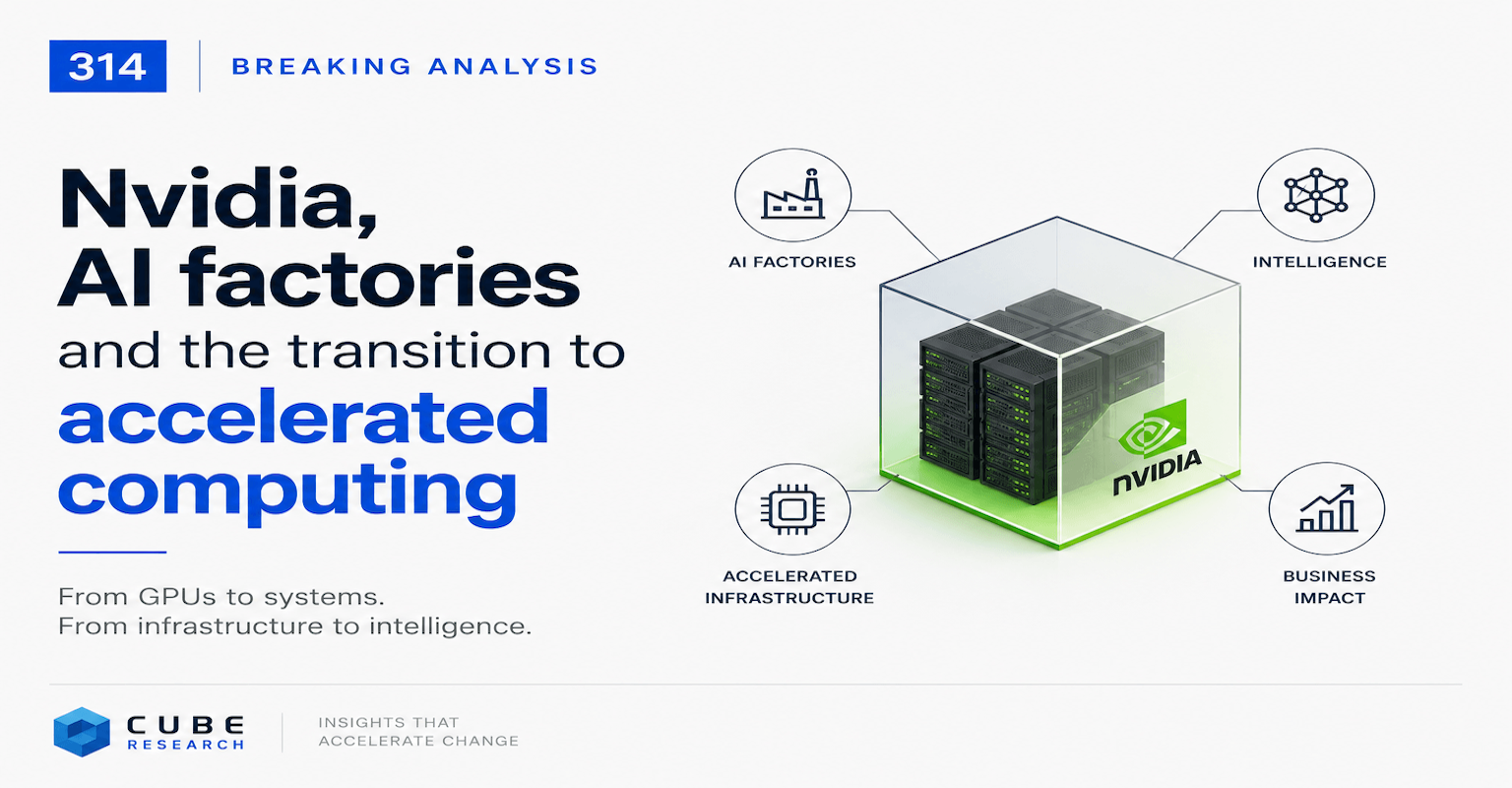
What are AI factories and how do they relate to Nvidia?
An AI factory is a large-scale data center designed specifically to produce artificial intelligence outcomes—models, predictions, and insights—rather than just process transactions or store data. Think of it as a manufacturing plant for intelligence: raw data goes in, and trained models or inferences come out. Nvidia positions its hardware and software as the essential machinery for these factories. The company sells not only GPUs but also networking (via Mellanox), servers (DGX systems), and orchestration software (base command, AI Enterprise). By providing a full-stack solution, Nvidia enables customers to quickly build and scale AI infrastructure without stitching together disparate components. The rise of AI factories is driven by demand from cloud providers, enterprises, and governments that need dedicated capacity for training large language models, running recommendation systems, or processing real-time sensor data. Nvidia's revenue from data center products has surged as AI factories proliferate, and CEO Jensen Huang has repeatedly emphasized that we are only in the early innings of this build-out. The company's ability to deliver end-to-end solutions solidifies its role not just as a chip vendor but as an indispensable partner in the AI economy.
Why does the author believe the market underestimates Nvidia's potential?
The author argues that while Nvidia's market cap has reached a five-handle (i.e., over $500 billion), investors are still pricing the company based on legacy mental models—treating it as a cyclical semiconductor firm rather than as the infrastructure provider for a new computing era. The market sees a high valuation and assumes it must be discounted, failing to internalize that the transition to accelerated computing is still in its early stages. The comparison to the RISC-to-x86 shift is instructive: that transition took decades and created massive value for incumbents like Intel. The current shift is arguably larger because AI touches every industry, and the demand for compute is growing exponentially. Nvidia's lead in AI hardware and software, combined with its network effects (CUDA as a developer ecosystem), creates a durable moat. The author suggests that as more businesses build AI factories and move workloads to accelerated platforms, Nvidia's revenue and earnings will continue to grow at rates that justify a premium valuation. In short, the market is discounting a future that is already unfolding, and the real growth potential is higher than currently priced in.
How does the current shift compare to the RISC-to-x86 transition?
The RISC-to-x86 transition in the 1980s and 1990s marked a move from simplified, efficient instruction sets (RISC) to more complex, powerful ones (x86), driven largely by Intel and AMD. That shift reshaped the entire computing landscape, from PCs to servers, and created the dominant architecture for decades. The current transition from general-purpose (CPU-led) computing to accelerated (GPU/accelerator-led) computing is similar in its transformative impact but differs in scope and speed. Where RISC-to-x86 was primarily about compute efficiency for general applications, accelerated computing targets specialized workloads—especially AI and high-performance computing—that rely on massive parallelism. Moreover, the RISC-to-x86 transition was gradual, while the AI boom has accelerated adoption. Nvidia's position also has parallels: just as Intel became the architecture standard, Nvidia's CUDA ecosystem has become the developer standard for accelerated computing. However, the competition is also more fragmented today, with alternatives like AMD, Intel's own accelerators, and custom chips from cloud providers. Nevertheless, the author believes that the potential market size for accelerated computing dwarfs that of the earlier transition, and Nvidia is analogous to Intel in the 1990s—a company whose full value won't be realized until the transition matures.

What are the key risks to Nvidia's accelerated computing thesis?
Despite the optimistic outlook, several risks could temper Nvidia's trajectory. First, competition is intensifying: AMD is gaining ground with its MI series accelerators, Intel is pushing its Gaudi and Ponte Vecchio chips, and cloud hyperscalers (AWS, Google, Microsoft) are developing custom AI chips tailored to their needs. If these alternatives achieve comparable performance and cost efficiency, Nvidia's market share could erode. Second, the transition itself may be slower than anticipated. Many enterprises still run legacy CPU-based applications, and moving to accelerated computing requires significant upfront investment and organizational change. A recession or downturn in AI investment could delay deployments. Third, geopolitical tensions, especially US-China trade restrictions, could limit Nvidia's ability to sell its most advanced chips to a key market, reducing revenue growth. Additionally, the high valuation leaves little room for error; any miss on earnings or guidance could trigger a sharp correction. Supply chain constraints also pose a risk, as manufacturing advanced GPUs requires leading-edge processes from TSMC, which is capacity-constrained. Finally, the regulatory environment around AI—including concerns about bias, safety, and energy use—could lead to restrictions that dampen demand for AI infrastructure. Investors must weigh these factors against the compelling growth story.
How might Nvidia's strategy evolve as AI factories become mainstream?
As AI factories grow in scale, Nvidia is likely to shift from selling discrete GPUs to providing integrated, turnkey solutions. The company already offers DGX systems and cloud services (DGX Cloud) that combine hardware, networking, and software into a single offering. Going forward, we can expect deeper vertical integration: Nvidia may acquire or develop more software capabilities—such as AI model orchestration, automation, and security tools—to make AI factories easier to deploy and manage. Additionally, the company will likely expand its networking portfolio (Mellanox, Cumulus) to handle the extreme data movement demands within and between factories. Another evolution is in energy efficiency: Nvidia is investing in advanced packaging (like chiplet architectures) and new interconnect technologies (like NVLink) to reduce power per flop, which is critical for sustainable AI infrastructure. The company may also pivot toward providing "AI as a service" through its own cloud offering, allowing smaller firms to access accelerated computing without massive capital expenditure. Finally, partnerships with system integrators, telecommunications companies, and governments will become more strategic as AI factories are built as national infrastructure. Nvidia's goal is to own the entire stack, from silicon to services, ensuring sticky revenue and a built-in upgrade path for customers.