How Elon Musk's Companies Are Financially Interconnected: Tesla's SEC Filing Reveals $573 Million in Transactions
Tesla's amended annual report, the 10-K/A filed with the SEC on April 30, pulls back the curtain on the extensive financial web linking Elon Musk's various ventures. For the first time, the filing quantifies the full scope of transactions among Musk's companies, totaling $573 million in revenue from SpaceX and xAI alone, along with millions in expenses flowing to X, The Boring Company, and Musk's personal security firm. This gives investors and analysts a clearer view of how resources and money move within this corporate ecosystem.
What did Tesla's amended annual filing reveal about Elon Musk's companies?
The 10-K/A filing discloses the full scope of financial interconnections between Tesla and other companies owned or controlled by Elon Musk. It shows that Tesla recorded $573 million in revenue from SpaceX and xAI during the reporting period. In addition, Tesla incurred millions of dollars in expenses paid to X (formerly Twitter), The Boring Company, and a private security firm that protects Musk. This is the most comprehensive snapshot yet of how Musk's corporate empire trades with itself, highlighting the complex web of related-party transactions that often draw scrutiny from investors and regulators.
Which companies are involved in these related-party transactions?
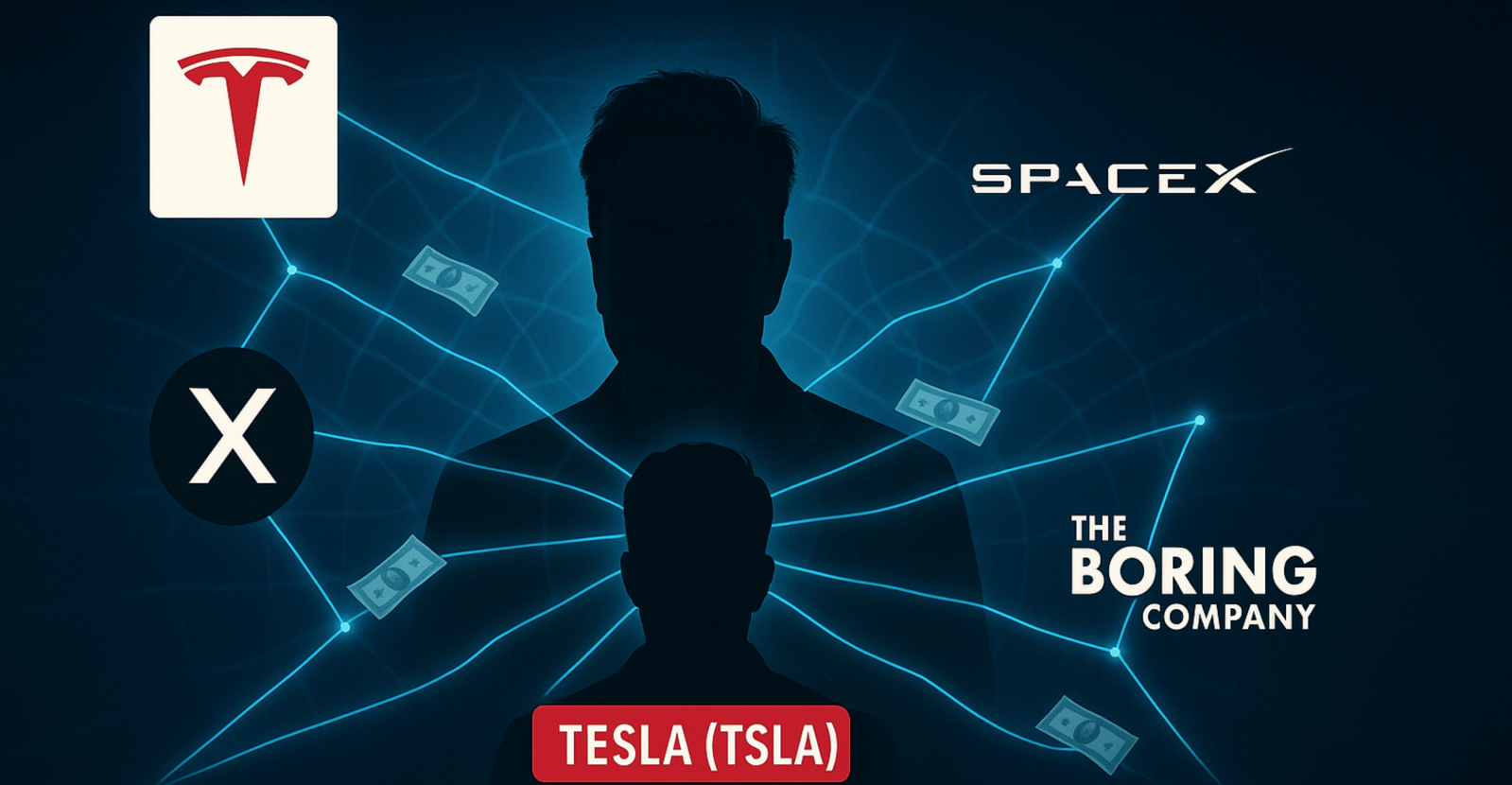
The transactions involve several of Elon Musk's ventures: SpaceX (aerospace), xAI (artificial intelligence), X Corp. (social media), The Boring Company (tunnel construction), and a personal security firm that provides protection for Musk. Tesla is the central node, receiving revenue from SpaceX and xAI while also paying out to X, The Boring Company, and the security firm. These intercompany deals cover a variety of services and goods, from software licenses and data services to infrastructure and personal safety. The filing does not break down every individual transaction but aggregates them to show the total flow.
How much revenue did Tesla earn from SpaceX and xAI?
Tesla earned a combined $573 million in revenue from SpaceX and xAI during the period covered by the filing. This represents a significant portion of the related-party income, although the filing does not specify the exact split between the two companies. The revenue comes from providing services such as cloud computing, engineering support, and manufacturing assistance. For perspective, this amount is roughly 3% of Tesla's total automotive revenue for the year, making it a notable but not dominant source of income. Investors watch these numbers closely because they reflect how Tesla leverages its resources to support Musk's other ventures.
What expenses did Tesla pay to other Musk companies?
On the expense side, Tesla paid millions of dollars to X Corp., The Boring Company, and Musk's personal security firm. The filing details that these payments covered items like advertising on X, tunnel construction services from The Boring Company, and security personnel and equipment. The total amount for these expenses is not explicitly stated separately in the summary, but it's part of the broader $573 million web. Analysts note that expenses to Musk's other companies can raise questions about conflicts of interest and whether Tesla is paying fair market value for services that might not be essential to its core business.
Why was this filing submitted as an amendment?
The 10-K/A is an amended annual report filed with the SEC to correct or update information from Tesla's original 10-K. Companies often submit amendments when they need to disclose additional details that were omitted or need clarification. In this case, the amendment provides a more granular breakdown of related-party transactions, which regulators may have requested after reviewing the initial filing. The timing—April 30—is after the usual 10-K deadline (60 days after fiscal year-end for large accelerated filers), indicating a deliberate effort to ensure full transparency. Such amendments are common for large corporations but attract special attention when they involve a CEO's multiple personal businesses.
How do these intercompany transactions affect Tesla's financial health?
The $573 million in revenue from SpaceX and xAI boosts Tesla's top line, but the expenses to other Musk companies reduce net income. However, the net financial impact is relatively small compared to Tesla's total revenues of over $96 billion (in fiscal 2024). The more significant implications are perception and governance. Investors may worry that Tesla is being used to support Musk's other ventures at below-market rates, or that Tesla's board is not adequately overseeing related-party deals. On the positive side, these transactions could represent synergies—for example, xAI's AI expertise might help Tesla's self-driving software. The filing doesn't make value judgments; it just reports the numbers.
What does this web of transactions say about Musk's corporate structure?
The filing reveals that Elon Musk operates a highly interwoven corporate empire where, despite separate legal entities, money, services, and personnel move freely between companies he controls. This structure allows for resource sharing—Tesla's manufacturing might aid SpaceX, and xAI's AI tools could benefit Tesla's Full Self-Driving. However, it also blurs traditional corporate boundaries and raises governance concerns. The $573 million web shows that Musk uses his position as CEO of multiple companies to facilitate these transactions, which regulators increasingly scrutinize for conflicts of interest. Some see it as a sign of efficient capital allocation; others view it as a risk to minority shareholders of each company.
Are there risks associated with these related-party transactions?
Yes, related-party transactions carry inherent risks. Conflict of interest is the primary one: Musk may prioritize the needs of one company over another if they compete for resources or talent. There is also pricing risk: if Tesla pays above-market rates to Musk's other firms, it harms Tesla's profitability; conversely, if it sells below market, it deprives Tesla of income. Furthermore, these transactions can invite SEC investigation or shareholder lawsuits if they appear to benefit insiders at the expense of the company. The filing itself is a step toward greater transparency, but the lack of detailed breakdowns (e.g., exact amounts per company, pricing methodology) means investors must trust that the board independently assessed each deal.