Cloudflare Unveils Optimized Global Network for Large Language Model Inference
Cloudflare has introduced a new infrastructure approach tailored for running large language models (LLMs) across its global network. By recognizing the high costs and heavy data demands of these AI systems, the company implemented a strategy that separates the processing of incoming text (input) from the generation of outgoing text (output) onto distinct, specialized hardware. This Q&A breaks down the key aspects of this innovation, from cost challenges to performance benefits.
- What is Cloudflare's new infrastructure for LLMs?
- Why are large language models so expensive to run?
- How does Cloudflare's global network improve LLM performance?
- What is the benefit of separating input and output processing?
- How does this infrastructure handle large volumes of text?
- What kinds of hardware optimizations are used?
- How does this compare to traditional LLM deployment?
- What impact might this have on AI applications?
What is Cloudflare's new infrastructure for LLMs?
Cloudflare recently announced a purpose-built infrastructure designed to run large AI language models across its sprawling global network. The key innovation is that it decouples the two main phases of LLM inference: input processing (parsing the user's prompt) and output generation (producing the response). Each phase runs on separate, optimized hardware systems. This allows Cloudflare to tailor resources precisely to the demands of each stage, improving efficiency and reducing latency. The infrastructure leverages Cloudflare's existing edge computing capabilities, so requests are processed at a location close to the user, further speeding up responses.
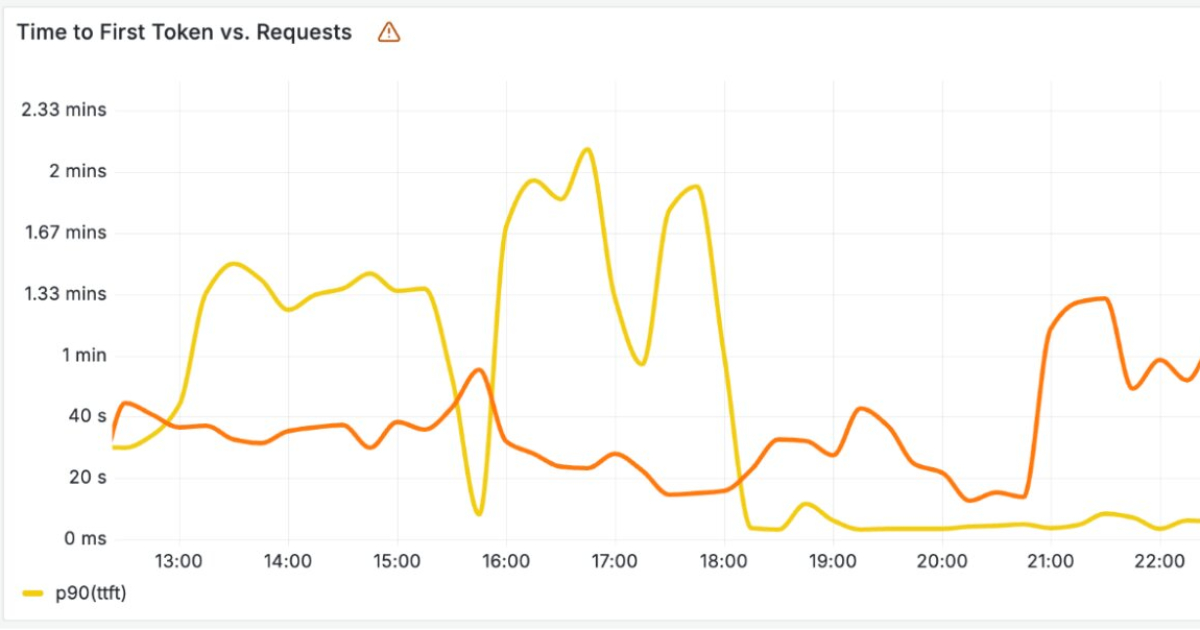
Why are large language models so expensive to run?
LLMs require massive computational power, especially for the output generation phase, which involves repeatedly predicting the next token. This process demands high-end GPUs or specialized AI accelerators. Additionally, these models handle large volumes of text—both incoming prompts and outgoing responses—which strains memory bandwidth and compute resources. The cost of maintaining clusters of expensive hardware, along with high electricity consumption, makes LLM inference financially intensive. Cloudflare's approach aims to optimize resource usage by not wasting expensive compute on less demanding tasks like simple input parsing.
How does Cloudflare's global network improve LLM performance?
Cloudflare's network spans over 300 cities worldwide, allowing it to run AI inference at the edge. Instead of sending all requests to a central data center, the infrastructure processes them at a node near the user. This reduces network latency significantly, making the model feel snappier. The global distribution also helps load balancing—traffic can be routed to less congested nodes. Furthermore, because Cloudflare already operates a vast content delivery network, it can reuse existing points of presence (PoPs) to host the specialized hardware, avoiding the need to build new facilities from scratch.
What is the benefit of separating input and output processing?
Separating input and output stages allows each to be handled by optimized hardware. Input processing—tokenizing the prompt, handling security checks, etc.—is relatively lightweight and can run on CPUs or low-cost accelerators. Output generation is compute-intensive and best served by powerful GPUs or TPUs. By decoupling them, Cloudflare can use heterogeneous computing: the right tool for each job. This reduces the overall cost because expensive GPU cycles are not wasted on simple parsing tasks. It also enables independent scaling—if the number of users surges, only the input processing nodes need to scale much more cheaply.
/presentations/game-vr-flat-screens/en/smallimage/thumbnail-1775637585504.jpg)
How does this infrastructure handle large volumes of text?
LLMs often deal with tokens—pieces of text that flow in and out rapidly. Cloudflare's infrastructure is designed to stream text efficiently between the input and output stages. Once the input is tokenized and processed, the output generation system takes over, producing tokens one by one. The decoupled architecture allows each system to manage its own memory and bandwidth demands. For instance, the output generation can use high-bandwidth memory (HBM) to keep model weights accessible, while the input side uses standard memory. Additionally, the edge network can buffer or pipeline text to avoid bottlenecks, ensuring smooth handling of large volumes.
What kinds of hardware optimizations are used?
Cloudflare hasn't disclosed full details, but the approach implies using heterogeneous computing: CPUs or custom ASICs for input processing, and high-end GPUs (likely NVIDIA H100 or AMD Instinct) for output generation. The network itself is optimized to reduce inter-node communication latency. They also likely employ techniques like model quantization and pruning to shrink model size without significant accuracy loss, allowing models to fit on fewer devices. The edge nodes are probably equipped with fast NVMe storage and low-latency interconnects to move data quickly between the input and output systems.
How does this compare to traditional LLM deployment?
Traditional LLM deployment often runs the model on a single large GPU server or cluster, where both input and output share the same resources. This can lead to inefficiency because the heavy output generation phase monopolizes the GPU, while input processing is idle. Cloudflare's decoupled approach changes this by splitting workloads across dedicated hardware, reducing cost and improving throughput. Another difference is that traditional setups are usually centralized, increasing latency for distant users. Cloudflare's edge deployment brings computation closer, lowering response times. This hybrid model is a novel way to deliver AI at scale.
What impact might this have on AI applications?
By making LLM inference more cost-effective and faster, Cloudflare's infrastructure could accelerate adoption of AI in real-time applications like chatbots, code assistants, and translation services. Startups and enterprises may find it easier to deploy LLMs without huge upfront GPU investments. The edge-based delivery also improves user experience with lower latency. However, there could be trade-offs in model size or precision if quantization is used. Overall, this represents a step toward democrative access to advanced AI, potentially sparking new innovations in edge AI and federated learning.