Rethinking Man Pages: How to Make Command Documentation More User-Friendly
The Challenge of Traditional Man Pages
For many developers and system administrators, man pages remain the primary source of truth for command-line tools. Yet despite their ubiquity, these pages often fall short as quick-reference guides. Lengthy descriptions, alphabetically ordered options, and dense wall-of-text formatting can make it frustrating to locate a specific flag or recall syntax under pressure. This is especially true for utilities like tcpdump, git, or dig, where the man page is the official documentation but not always the most accessible.
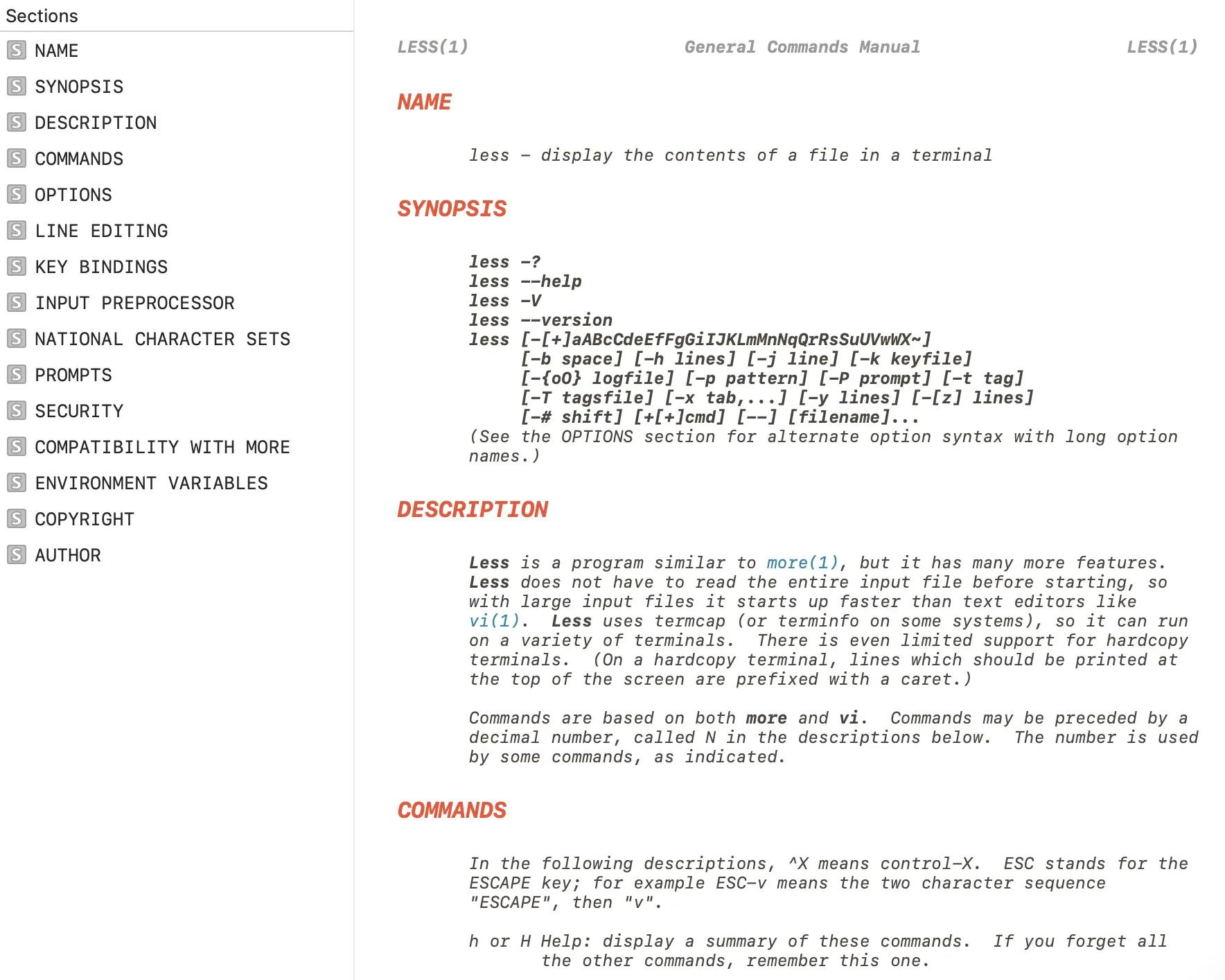
Having spent time refining the Git man pages last year, I began to wonder: What if a man page could double as a built-in cheat sheet? What changes would make it easier to scan, remember, and use? This article explores a few promising approaches drawn from real-world examples and personal experiments.
Innovative Approaches to Man Page Design
The OPTIONS SUMMARY Section
Most man pages present a SYNOPSIS that lists every possible option in a single, often impenetrable line. Consider the classic ls [-@ABCFGHILOPRSTUWabcdefghiklmnopqrstuvwxy1%,] or grep [-abcdDEFGHhIiJLlMmnOopqRSsUVvwXxZz]. These compressed strings are nearly unreadable for newcomers and slow for experienced users looking for a specific switch.
The rsync man page offers a clever alternative. Its SYNOPSIS remains terse and high-level:
Local: rsync [OPTION...] SRC... [DEST]
Then it introduces an OPTIONS SUMMARY table that provides a one-line description for each flag. For example:
--verbose, -v— increase verbosity--info=FLAGS— fine-grained informational verbosity--quiet, -q— suppress non-error messages
This section acts as a rapid lookup table, while the full OPTIONS section later gives detailed explanations. The result is a page that serves both beginners (who need context) and power users (who need quick reminders).
Categorized Options
Another innovation comes from the strace man page, which groups its options by functional category rather than alphabetically. Categories like “General”, “Startup”, “Tracing”, “Filtering”, and “Output Format” allow readers to narrow their search based on what they’re trying to achieve. This is far more intuitive than hunting through a simple A–Z list.
Inspired by this, I experimented with the grep man page, reorganizing its options into a categorized summary. For instance, options like -l (files with matches) would sit under “Output Control”, while -i (ignore case) would fall under “Matching Behaviour”. The exercise highlighted how easy it is to forget the exact name of a flag (e.g., -l) when it’s buried in a long alphabetical list. Categories make the logic behind option names more transparent.
Built-in Cheat Sheets
The Perl documentation suite takes the concept even further. Alongside traditional man pages like perlfunc and perlre, Perl ships with man perlcheat — a dedicated cheat sheet page. Its syntax tables are compact, 80-column friendly, and instantly scannable:
foreach (LIST) { }      for (a;b;c) { }
while (e) { }           until (e) { }
if (e) { } elsif (e) { } else { }
This approach is powerful because it separates quick reference from deep reference. A user can flip to perlcheat to recall a loop structure, then dive into the full man page for details. The idea could be replicated for other tools, perhaps via a standard “cheat” subsection within their man pages.
Practical Experiments and Takeaways
After studying these examples, I attempted to redesign a portion of the grep man page by adding an OPTIONS SUMMARY grouped by category. While the result wasn’t perfect — some options straddle multiple categories — it did make finding -l markedly faster. The biggest lesson was that structure matters. A man page that anticipates how users search for information (by feature, by scenario, by verbosity) will always be more usable than one that simply dumps everything alphabetically.
Of course, not every tool needs a full cheat sheet. But even small changes — like a terse SYNOPSIS paired with a summary table, or section headings that reflect user intent — can dramatically improve the experience. Tool authors and maintainers should consider these patterns when updating documentation.
Ultimately, the best man page is one you don’t have to wrestle with. By borrowing ideas from rsync’s summary, strace’s categories, and Perl’s cheat sheets, we can make command-line documentation more approachable, efficient, and even enjoyable to use.